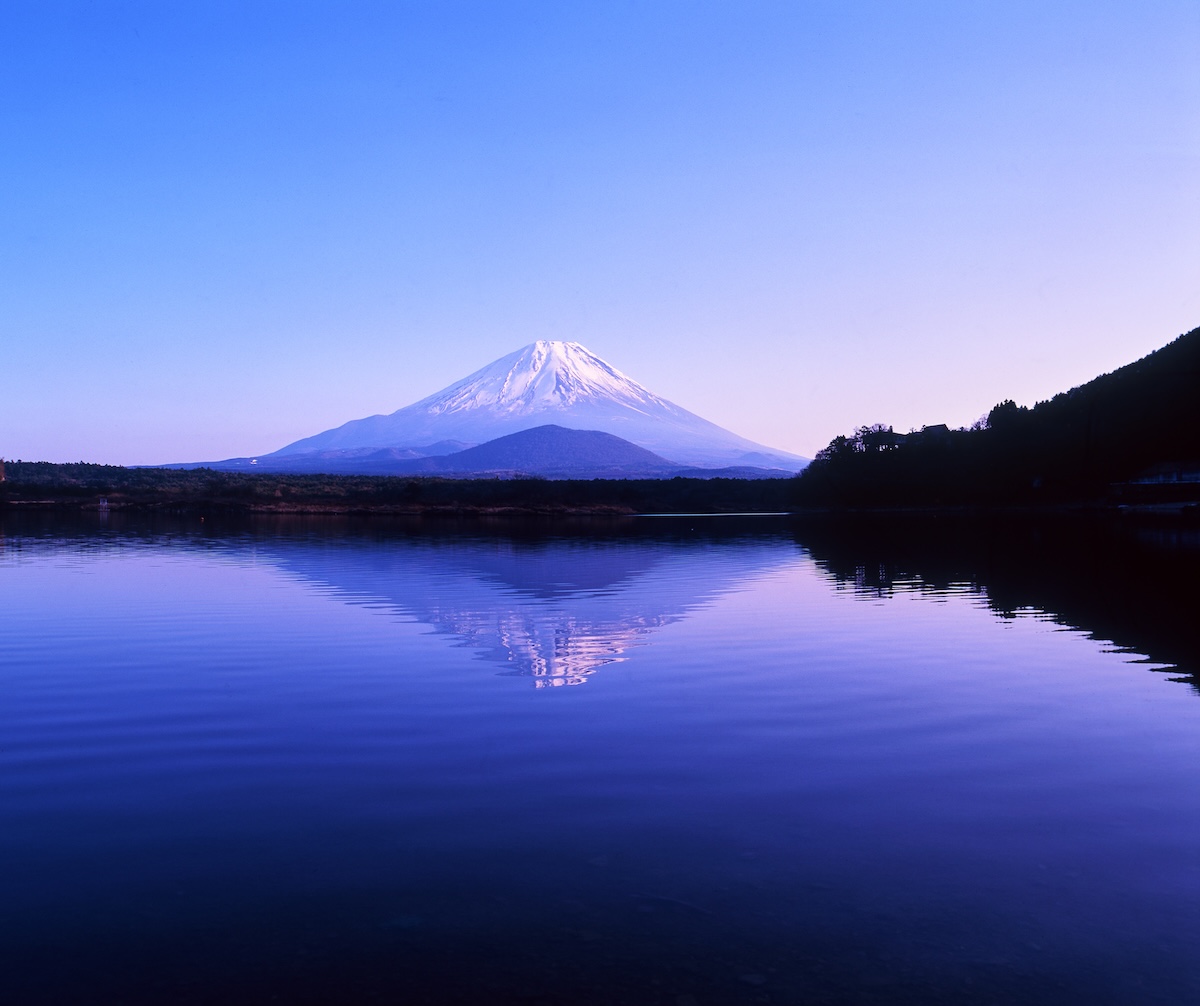
Fuji Reflected in Water and Shadows in the Forest
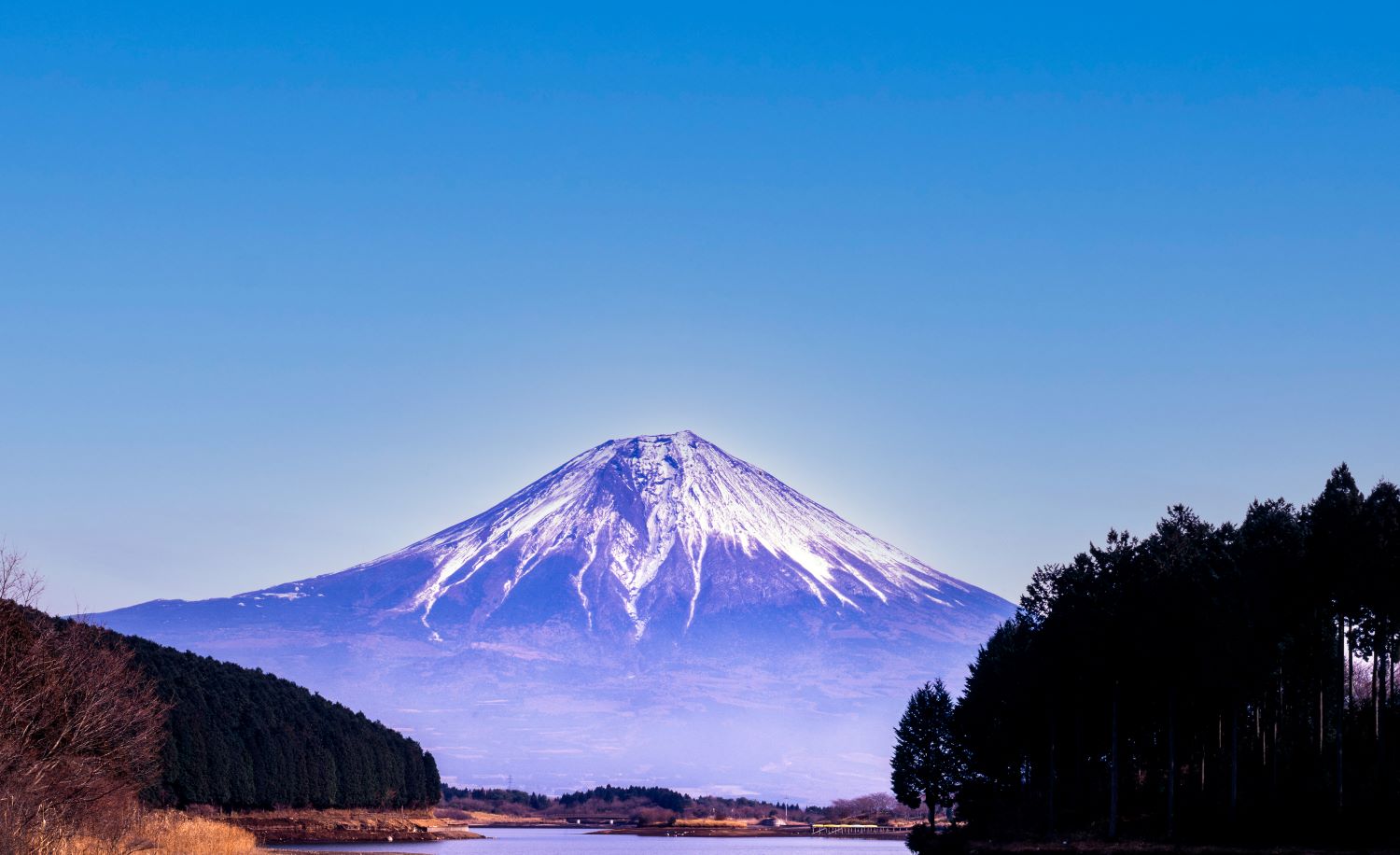
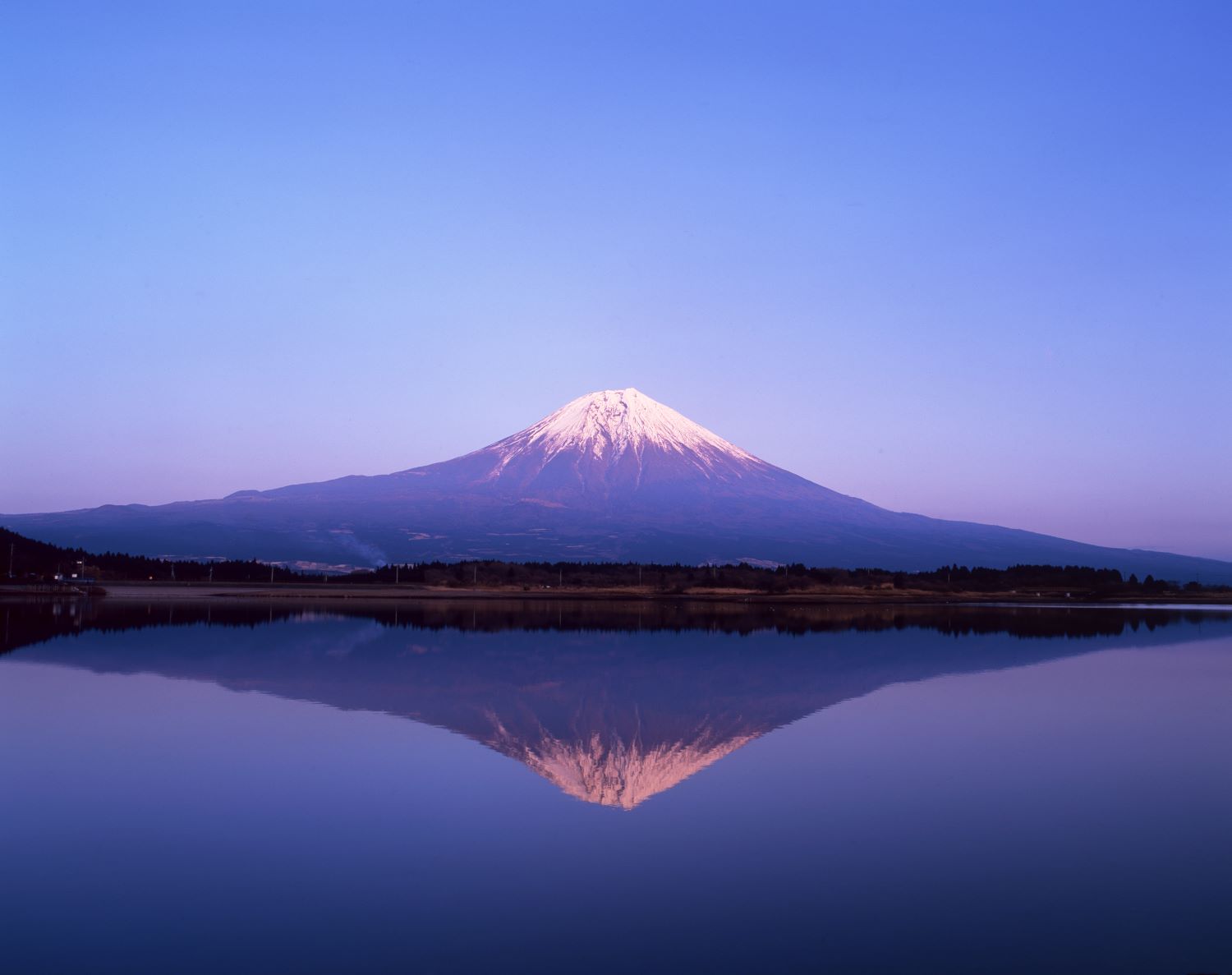
Mount Fuji reveals entirely different expressions depending on the season, time of day, and vantage point. The “upside-down Fuji” reflected in Lake Tanuki conveys serene beauty, the “Fuji cradling a child” seen from Lake Shōji offers a sense of familiarity, the sunrise viewed from Lake Motosu radiates mystical power, and Fuji glimpsed through the forest conveys a majestic grandeur, blending seamlessly with the woods.
Each photograph depicts Mount Fuji not merely as a mountain, but as a deeply rooted symbol in the Japanese psyche. The light reflecting on the lake’s surface, the dawn sky ablaze, the silhouettes of trees. By capturing nature’s ever-changing expressions in each moment, the multifaceted charm of Mount Fuji emerges.
Table of Contents
A Silent Morning — Snow-Capped Mount Fuji Reflected in Lake Tanuki
Lake Tanuki is a popular photography spot offering a direct view of Mount Fuji. Especially on winter mornings, the crisp air makes the snow-capped peak stand out sharply. The forest belt stretching along the lakeshore frames the scene, accentuating Fuji’s majesty. With luck, you might even catch the “inverted Fuji” reflected on the lake surface—a truly serene beauty.
The Stillness of Dawn — Mount Fuji Reflected Upside Down in Lake Tanuki
Tanuki Lake is renowned for the most beautiful “inverted Mount Fuji” appearing on calm, early mornings. The indigo light before dawn merges the lake surface with the sky, softly enveloping the silhouette of Mount Fuji. It is a moment like a poem of dawn, where the beating heart of nature, alive within the stillness, can be felt.
Ripples Shaking the Stillness — Morning at Lake Shōjiko
Lake Shōji is a place where tranquility remains among the Fuji Five Lakes. Its charm lies in the soft light just after dawn and the subtle expressions created by faint ripples. It’s not a perfect reflection of Mount Fuji, but rather the momentary wavering that conveys nature’s rhythm, giving the photograph a sense of life.
Was this article helpful?
If you found this helpful, please let us know by clicking the button below.
2025.09.24
Related Photos
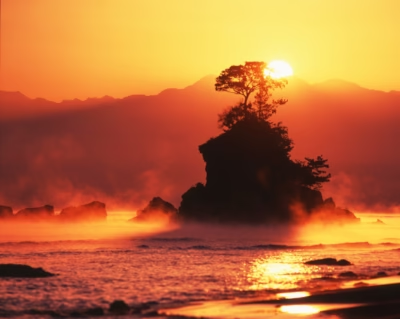
Sunrise Through Sea Smoke — Onna-iwa and Mt. Tsurugi in Winter
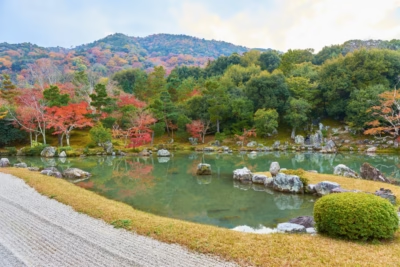
Autumn Splendor of Tenryu-ji’s Sogen Pond Garden
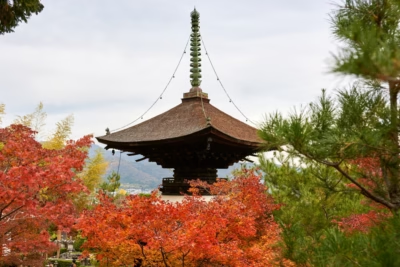
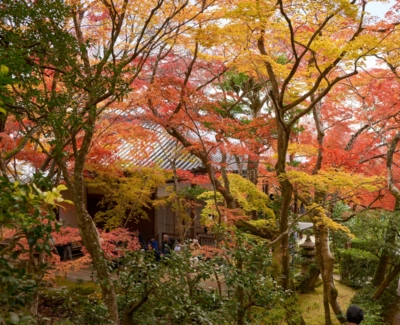
Autumn Colors in the Rear Garden of Jojakko-ji
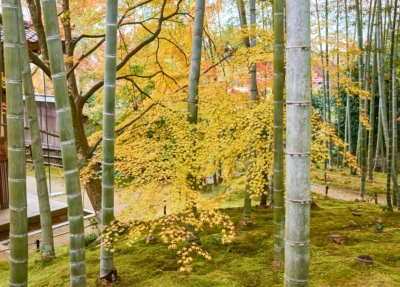
Autumn Maples Enriching the Temple Bamboo Grove — Tranquility at Jojakko-ji
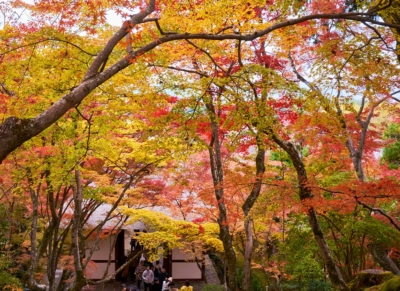
Autumn Colors Around the Main Hall of Jojakko-ji — A Quiet Sanctuary in Fall