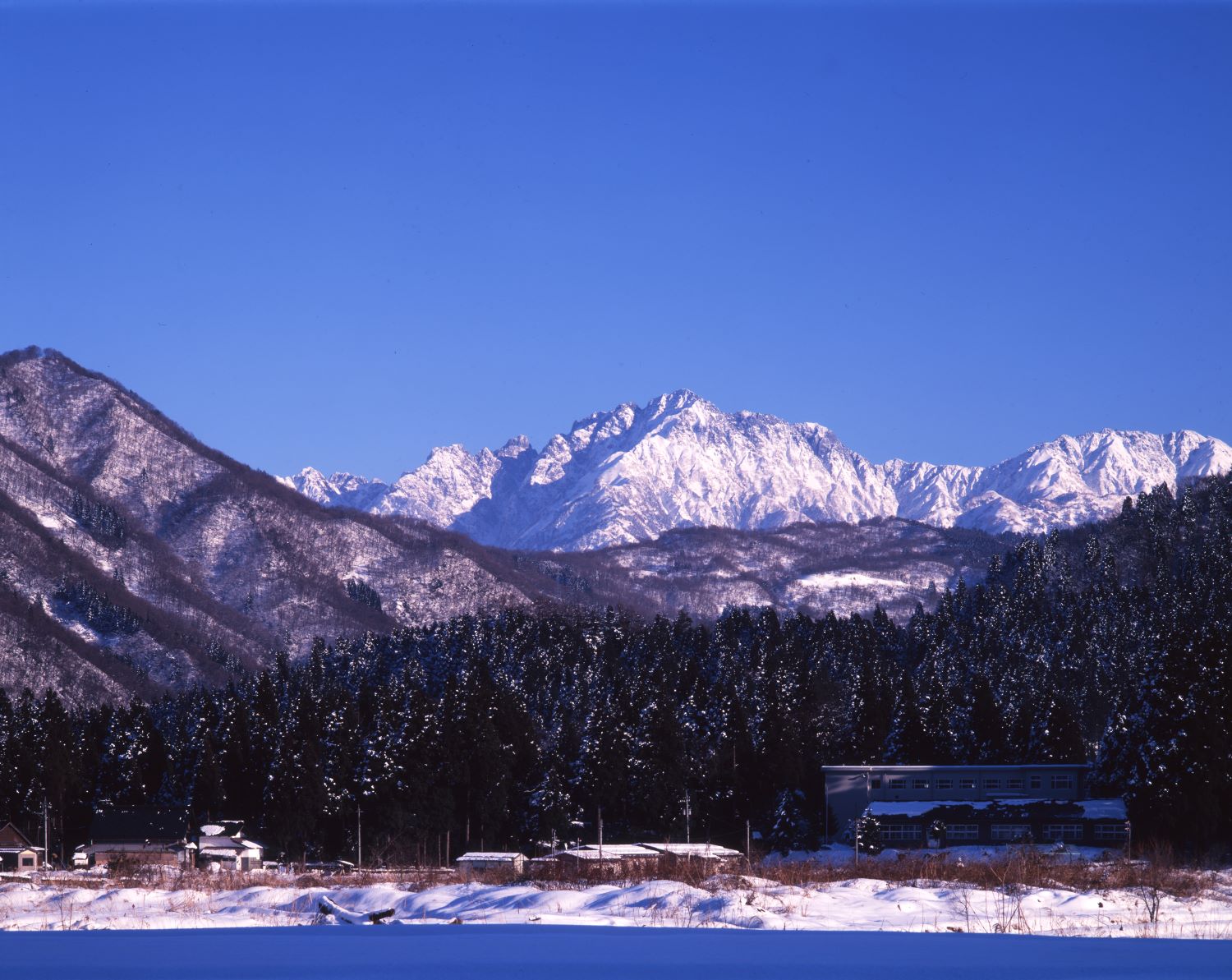
Distant Mt. Tsurugidake
Table of Contents
Distant Mt. Tsurugidake ― Expressions of Light Through the Seasons
Mt. Tsurugidake (2,999m) boasts the most rugged profile in the Northern Alps and is a renowned Japanese peak known as the “Hall of Rocks.” Its appearance changes dramatically with the seasons and light conditions.
Mt. Tsurugidake towering over the village life in winter, the sharpness of its ridges standing out against a clear blue sky, the spring scenery where fresh greenery overlaps with lingering snow, and its fantastical form tinged crimson at dusk—though it is the same mountain, it transforms endlessly through the drama woven by time and the seasons.
This series captures both the “severity” and “beauty” of Mount Tsurugi from a distance, illustrating the distance between humans and nature while expressing its enduring presence in people’s hearts as an object of mountain worship.
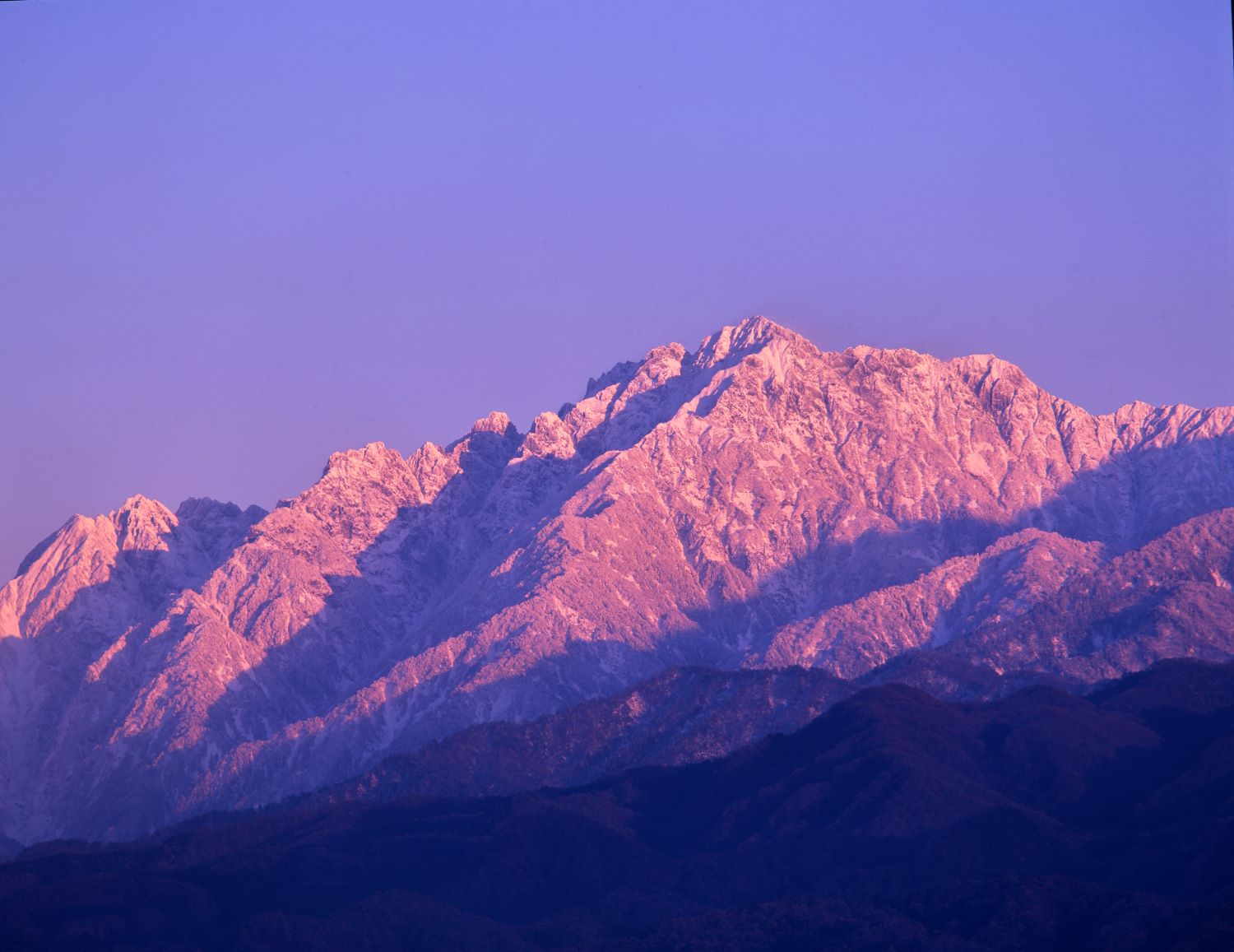
The crimson-flamed rock peaks of Mt. Tsurugidake
At dusk, Mt. Tsurugi’s rock faces and snowfields are bathed in oblique light, turning the entire mountain crimson and purple. This coloration appears just before sunset and vanishes in an instant, making it a moment filled with tension and awe for photographers. The sight of its harsh mountain form enveloped in soft light reveals another of Mt. Tsurugi’s charms.
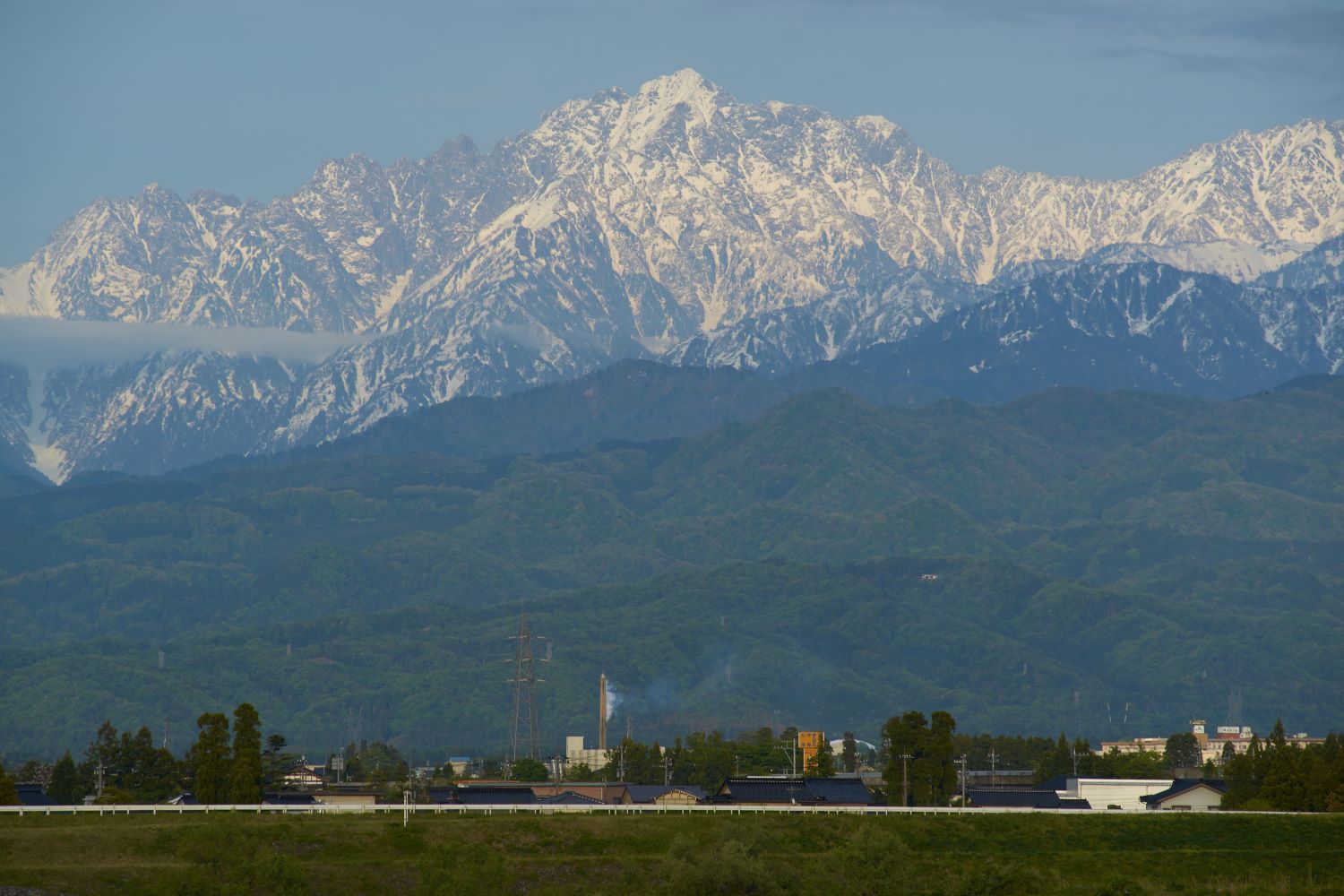
The Village of Fresh Greenery and Mt. Tsurugidake’s Lingering Snow
Come spring, the satoyama hills are cloaked in fresh greenery, and behind them, Mt. Tsurugidake appears, still bearing remnants of snow. The stark contrast between the human settlements and the vast wilderness stretching just beyond them evokes a sense of why Mount Tsurugi has long been an object of faith and reverence.
Mt. Tsurugidake, snow-capped, watches over the village life
Mt Tsurugidake dons a blanket of pure white snow in winter, presenting a stark contrast to the villages and forests at its base. The rugged peaks towering directly behind people’s homes create a scene that makes one feel how closely nature and daily life are intertwined.
Was this article helpful?
If you found this helpful, please let us know by clicking the button below.
2025.09.19
Related Photos
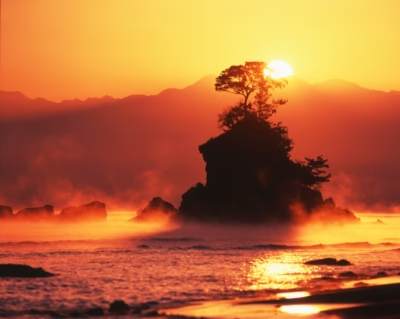
Sunrise Through Sea Smoke — Onna-iwa and Mt. Tsurugi in Winter
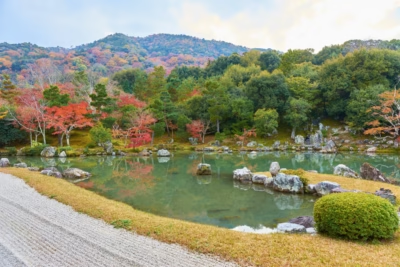
Autumn Splendor of Tenryu-ji’s Sogen Pond Garden
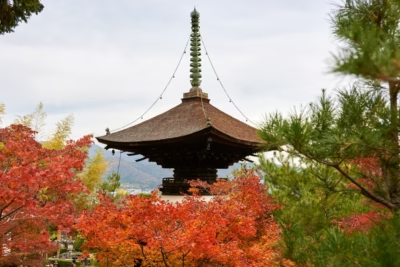
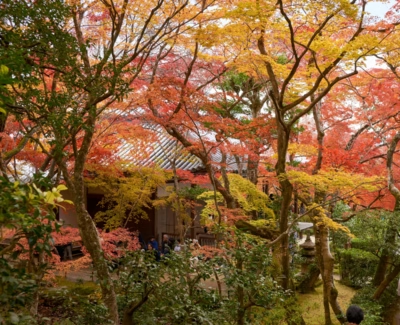
Autumn Colors in the Rear Garden of Jojakko-ji
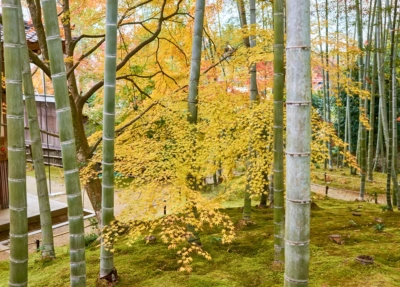
Autumn Maples Enriching the Temple Bamboo Grove — Tranquility at Jojakko-ji
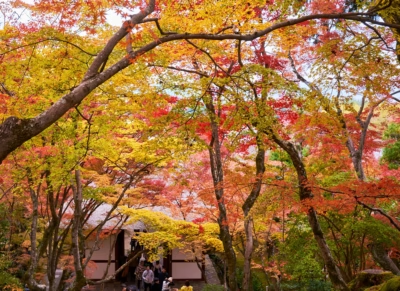
Autumn Colors Around the Main Hall of Jojakko-ji — A Quiet Sanctuary in Fall